
Why Elon Musk’s Robot Surgeon Prediction Signals a Turning Point for AI in Healthcare Systems
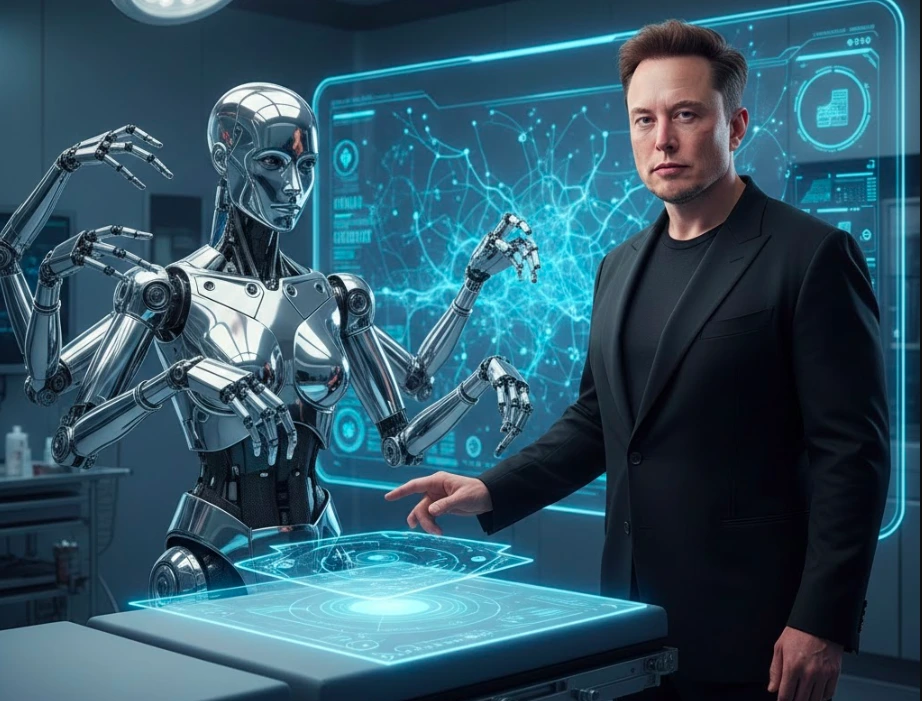
When Elon Musk said in early 2026 that humanoid robots, Robot Surgeon, could eventually perform complex medical procedures more consistently than human surgeons, the statement drew predictable reactions. Some dismissed it as another ambitious forecast. Others saw it as an unrealistic provocation.
But for healthcare executives, policymakers, and AI leaders, the statement matters for a different reason. It reflects structural pressures already reshaping global healthcare systems, where automation is no longer optional but increasingly inevitable.
Whether Musk’s timeline proves accurate or not, the forces behind his prediction are real and accelerating.
The Systemic Problem Musk Is Pointing To
Healthcare systems across developed and emerging economies face the same constraints:
- Chronic shortages of trained doctors and surgeons
- Rising patient volumes, driven by aging populations
- Escalating costs tied to highly skilled labor
- Burnout and fatigue, which directly affect outcomes
Training a surgeon can take 10 to 15 years, and scaling human expertise is slow by design. From a systems perspective, this creates a bottleneck that technology leaders increasingly see as unsustainable.
Musk’s argument is not primarily about robots outperforming elite surgeons. It’s about scaling consistency in a system under strain.
Why Robotics and AI Look Attractive at the System Level
From a healthcare operations standpoint, robots offer three theoretical advantages:
1. Consistency
Robotic systems can repeat the same action with identical precision, reducing variability across procedures.
2. Availability
Machines don’t face shift limits, fatigue, or scheduling constraints, making 24/7 utilization possible.
3. Continuous Improvement
Software-driven systems can be updated and retrained centrally, allowing improvements to propagate faster than traditional medical training models.
These characteristics explain why automation is already deeply embedded in diagnostics, imaging, and administrative workflows. Surgery is simply the next frontier, not an isolated leap.
Where We Are Today: Assistance, Not Autonomy
Despite the rhetoric, current medical robotics remains firmly in the assistive category.
Robotic surgical systems today:
- Enhance precision and stability
- Reduce tremors
- Enable minimally invasive techniques
- Operate entirely under human control
There are no healthcare systems approving autonomous surgical robots, humanoid or otherwise. Every procedure still relies on human decision-making, oversight, and legal responsibility.
This distinction is critical for understanding the gap between Musk’s long-term vision and present-day reality.
Why Humanoid Robots Change the Conversation
Traditional surgical robots are specialized machines. Humanoid robots like Tesla’s Optimus represent a different category altogether.
They are designed for:
- General-purpose physical interaction
- Human-like dexterity
- Adaptability across tasks
For healthcare systems, this raises a strategic question: could a single robotic platform eventually perform multiple clinical and logistical roles, rather than being limited to one procedure type?
That possibility, not near-term surgery replacement, is what makes humanoid robotics strategically interesting.
The Real Barriers Are Not Technical Alone
Even if robotic capability advances rapidly, healthcare adoption faces constraints that technology alone cannot solve:
- Regulatory approval for autonomous medical systems
- Liability frameworks when machines make decisions
- Ethical governance around patient consent and trust
- Integration with existing clinical workflows
Healthcare is one of the most risk-averse industries for good reason. Any system failure has irreversible consequences, which explains why adoption timelines lag behind technological capability.
Human Error vs Systemic Risk
One of Musk’s strongest points is the reduction of human error. Fatigue-related mistakes are a documented problem in medicine.
However, healthcare leaders must balance this against systemic risk. A software failure or flawed model could affect thousands of procedures simultaneously. This is fundamentally different from isolated human error.
As a result, most healthcare systems prioritize human-in-the-loop models, where AI augments decision-making rather than replacing it.
What Healthcare Leaders Should Take Away
For executives and policymakers, Musk’s prediction should be viewed less as a literal forecast and more as a signal:
- AI and robotics will continue moving closer to clinical decision boundaries
- Pressure to automate will intensify as shortages worsen
- Assistive systems will expand before autonomy is considered
- Governance and regulation will shape timelines more than engineering
The future of healthcare automation is likely to be incremental, layered, and tightly regulated, not abrupt.
The Strategic Implication for AI in Healthcare
The real turning point is not robot surgeons. It’s the shift toward software-defined healthcare systems, where data, AI, and automation increasingly shape outcomes.
Robots may never fully replace surgeons. But they will almost certainly:
- Redefine how surgical teams operate
- Reduce variability in routine procedures
- Extend care capacity in constrained systems
In that sense, Musk’s claim is less about disruption and more about directional inevitability.
Final Perspective
Elon Musk’s prediction sits at the intersection of ambition and reality. It overstates short-term feasibility while correctly identifying long-term pressures.
For healthcare systems, the question is no longer whether AI and robotics will play a larger role. It’s how much autonomy they will be allowed, and under what safeguards.
That decision will be shaped as much by policy and ethics as by code and hardware.
FAQs
Will AI robots replace surgeons in healthcare systems?
No. AI robots are expected to augment surgeons, not replace them. Healthcare systems are moving toward human-in-the-loop models, where robots assist with precision and consistency while doctors retain decision-making authority and legal responsibility.
What exactly did Elon Musk predict about robot surgeons?
Musk said rapid advances in AI, computing power, and robotics could allow humanoid robots to perform some medical procedures more consistently than humans in the future, especially as healthcare systems face staffing shortages and scalability challenges.
Can robots perform autonomous surgery today?
No. There are no approved autonomous surgical robots in clinical use. All current robotic surgical systems operate under direct human control and supervision, with surgeons responsible for all clinical decisions.
Why are humanoid robots like Optimus relevant to healthcare discussions?
Humanoid robots are relevant because they are general-purpose platforms capable of physical tasks, unlike single-use surgical machines. Strategically, this raises questions about future multi-role automation in hospitals, not immediate surgical autonomy.