
China’s Xinjiang AI Textile Plant: How an Unmanned Factory with 5,000 Looms Works 24/7

Factories around the world are changing quickly. Many tasks that were once done by people are now handled by machines and computer systems. Some factories use smart technology that allows machines to work on their own with very little human involvement.
One example that has attracted a lot of attention is a textile factory in Xinjiang, China. Reports say this factory runs all day and night and uses about 5,000 automated looms, with no workers needed on the production floor.
This kind of factory naturally makes people curious. How can machines run without workers watching them? What does artificial intelligence actually do in a factory? Why was this factory built in Xinjiang? And what could this mean for factory jobs in the future? This article answers these questions.
What Is an AI Textile Plant?
A textile plant is a place where materials like cotton or man-made fibers are turned into fabric or cloth. In the past, many workers were needed to run the machines, check the quality of the fabric, and keep production moving.
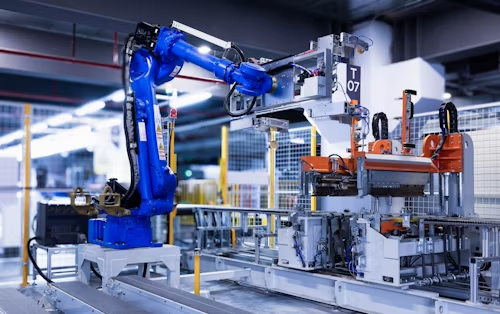
An AI textile plant works differently. It uses smart machines, sensors, and computer systems to handle most of the work. These systems can turn machines on and off by themselves, spot problems in the fabric, adjust how fast the machines run, and send messages to technicians if something needs attention.
Simply put, the machines do the hard physical work, and the computer software keeps everything running smoothly in the background.
What Does 5,000 Looms Mean?
A loom is a machine that turns yarn into fabric by weaving the threads together. Having 5,000 looms in one factory is very large and shows that the factory produces fabric on a massive scale.
For comparison, small workshops may only have a few dozen looms, while medium-sized factories might have a few hundred. When a factory has thousands of looms, it means it is designed for large, continuous production.
Because these looms are automated, they can work at the same steady speed, make fewer mistakes, and run all day and night without stopping. This is why the factory stands out; it combines very large production with advanced automation.
Is This Type of Factory Unique to China?
No, factories that operate with very little human presence are not limited to China. Similar “lights-out” or highly automated factories can be found in many other countries.
For example, Japan uses this technology in electronics and car manufacturing, Germany applies it in precision industries, the United States uses it in areas like semiconductor production and logistics, and South Korea uses it in robotics and display manufacturing.
China often attracts more attention because its factories are large and are built quickly, but the technology behind them is used all over the world.
How Artificial Intelligence Is Used in Textile Manufacturing
1. Quality Control
In an AI-powered textile factory, cameras and sensors watch the fabric as it is being made. The system checks the material in real time and looks for problems such as broken threads, uneven colors, or mistakes in patterns. Because this checking is done by computers, it is often faster and more consistent than relying only on human eyes.
2. Predictive Maintenance
All machines slowly wear out over time. AI systems keep track of things like vibration, temperature, and how fast machines are running. Studying this information, the system can tell when a machine may need repairs. This allows maintenance to be done before a breakdown happens, helping the factory avoid sudden stops and delays.
3. Energy Efficiency
AI also helps the factory use energy more wisely. It can adjust how much power machines use, decide the best times to run certain equipment, and reduce unnecessary waste. Using energy more efficiently can lower costs and reduce the factory’s impact on the environment.
4. Production Planning
AI systems help decide how the factory should operate each day. They can choose which machines should be running, adjust production levels based on demand, and decide when to slow down or speed up work. This helps the factory stay productive while avoiding overuse of machines or resources.
Why Xinjiang Is Involved in Textile Manufacturing
Xinjiang is a region that produces large amounts of cotton, which is a key material used to make fabric. It also has access to other raw materials and areas set aside for industrial development, making it a practical location for textile factories.
Because textile production uses a lot of cotton and energy, factories are often built close to where the raw materials come from. This helps reduce transportation costs and makes production more efficient.
Automation makes it easier for factories in more remote areas to operate smoothly. With advanced machines and computer systems, these factories need fewer workers on-site and can still connect easily with supply chains across the country and around the world. Similar automated factories can also be found in places like Europe, Japan, South Korea, and the United States.
What the Future of Textile Manufacturing May Look Like
Looking at how the industry is changing today, future textile factories are likely to use even more automation and artificial intelligence. Many factories may run with fewer workers on the production floor and focus more on producing fabric efficiently and consistently. At the same time, workers will need more technical skills to manage, maintain, and support these advanced systems.
For consumers, these changes could mean better and more consistent product quality, faster production times, and possibly lower prices. However, as technology continues to advance, societies will also need to think about how to train workers for new kinds of jobs, how to balance technology with employment, and how to manage industrial growth in a responsible way.