
When Vision Becomes Data: What Neuralink Blindsight Really Signals for Human–Machine Interfaces
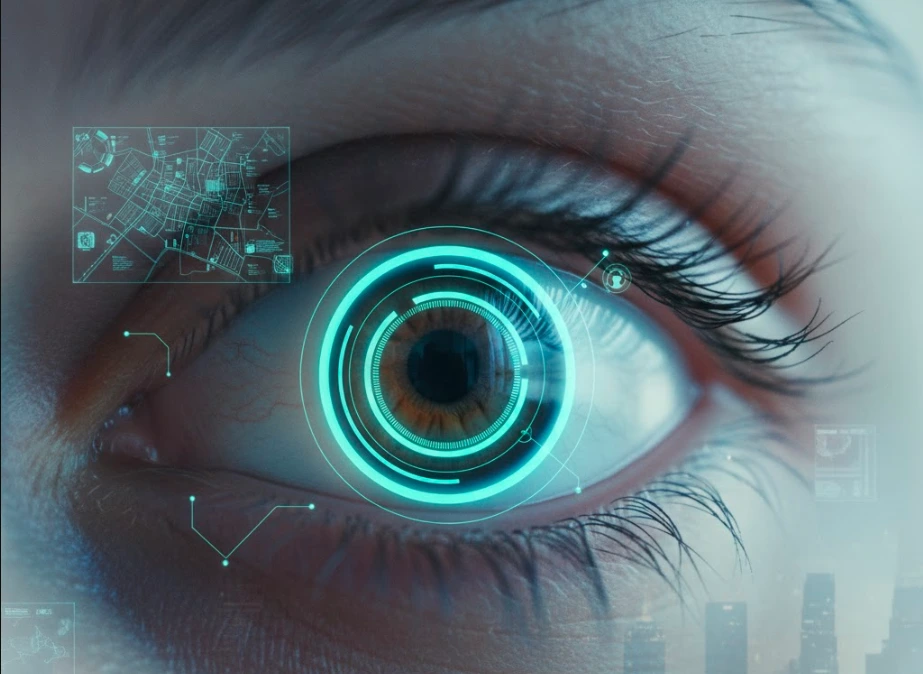
For thousands of years, vision meant light entering the eye. Cameras replaced the eye on screens. Now, a different idea is taking shape: Neuralink Blindsight vision as data, delivered directly to the brain. That reframing sits at the heart of Blindsight, a vision-focused neural interface being developed by Neuralink and publicly discussed by Elon Musk.
This article is not a how-to guide. It asks a more consequential question for technologists: what changes when perception itself becomes an interface?
Blindsight Is Not a Vision Device. It’s a Data Interface.
Calling Blindsight a “vision implant” understates what’s new. The system’s defining move is to treat sight as input rather than anatomy. Visual scenes are captured, compressed, translated, and delivered as neural signals. The eye, retina, and optic nerve are no longer prerequisites; the brain becomes the endpoint of a data pipeline.
That framing matters. Once perception is modeled as data transfer, it joins the same universe as APIs, sensors, codecs, and error rates. The success of Blindsight is therefore less about photorealism and more about whether the brain can reliably decode a synthetic signal and use it for decisions.
From Seeing to Interpreting: What the Brain Actually Does
Human vision is not a live feed; it’s inference. The brain stitches contrast, edges, motion, and prior knowledge into a usable model of the world. That’s why even crude inputs can be useful. Research across neuroscience has long shown that sparse stimulation of the visual cortex can yield spatial awareness and motion cues.
This parallels modern AI perception. Computer vision systems don’t “see” images; they infer patterns. Blindsight leans into the same idea: low-resolution signals can still be actionable. If the brain can learn a new mapping between stimulation patterns and meaning, usefulness arrives well before clarity.
Why Neuralink Blindsight Matters Beyond Blindness
Restoring some form of visual perception to blind patients is the ethical and medical starting point. But the broader implication is validation: direct sensory data injection works at all. If that’s true, the interface does not need to stop at sight.
Once a channel into the brain is established, different data streams become conceivable. Depth cues, hazard alerts, navigation vectors, or machine states could be encoded in ways the brain learns to interpret. In that sense, Blindsight is a proof point for a class of interfaces where perception becomes programmable.
Screens, Glasses, and Headsets vs Neural Interfaces
Every generation of computing has pushed interfaces closer to the user.
- Screens externalize information but demand constant attention.
- AR/VR headsets overlay data on vision but add friction, fatigue, and social constraints.
- Neural interfaces promise something quieter: information delivered without occupying the visual field.
Blindsight suggests a future where the interface is not worn or held. It’s internal. If that path holds, it could resolve long-standing tradeoffs between immersion and usability that have limited AR adoption.
The Quiet Convergence: Vision, Control, and Computation
Blindsight also builds on the same neural interface foundation being used to explore whether people could eventually control technology directly with their brain, extending brain–computer interfaces beyond medical use. This convergence matters. Separate implants for sight, movement, and digital interaction are inefficient; shared substrates scale better.
From a systems perspective, the likely destination is not single-purpose implants but general neural I/O layers with software-defined functions. Vision is simply the most intuitive place to start.
If Vision Is Software, Who Owns the Update?
Treating perception as software raises questions the industry has not had to answer before.
- Updates: What happens when perception improves with a firmware release?
- Security: How do you protect a sensory channel from interference?
- Ownership: Who controls the data that becomes part of someone’s lived experience?
These are not edge cases. They are platform questions. If perception becomes programmable, governance matters as much as performance. The history of consumer tech suggests these issues surface quickly once systems leave the lab.
Why “Low Resolution” Is Still Disruptive
Public commentary has emphasized that early Blindsight output would be low resolution. That is not a weakness; it’s a realistic baseline. Disruption rarely starts polished. Early GPS was inaccurate. Early speech recognition was brittle. Each succeeded because the first version proved the interface, not the experience.
If Blindsight reliably provides orientation, motion awareness, or obstacle detection, it changes outcomes even without detail. And once the interface is validated, iteration follows.
Superhuman Vision Is the Wrong Benchmark
Speculation about infrared or ultraviolet perception grabs attention, but it’s the wrong yardstick. The near-term value lies in new channels for meaning, not expanded spectra. A signal that conveys urgency, direction, or state can be more valuable than seeing another color.
In interface design, usefulness beats novelty. Blindsight’s real test is whether the brain can adopt an unfamiliar signal and make it intuitive. If it can, the door opens to entirely new categories of human–machine collaboration.
The End of Single-Purpose Brain Implants
If Neuralink Blindsight works even modestly, it undermines the idea of single-function neural devices. Vision, movement, and digital interaction share constraints: signal fidelity, learning curves, safety, and latency. A unified interface simplifies all of them.
That trajectory mirrors computing history. Specialized peripherals gave way to general-purpose platforms. Neural interfaces are likely to follow the same arc, with Blindsight remembered as an early validation rather than the final form.
What Success Looks Like, Realistically
A realistic success case does not involve perfect sight. It looks like this:
- A stable neural channel that users can learn.
- Consistent interpretation across environments.
- Incremental gains without invasive recalibration.
Achieving that would shift the conversation from whether neural perception works to how it should be used.
Also Read: Top 10 Free Image-to-Video AI Tools (Easy Guide for Beginners)
The Takeaway
Blindsight is not about eyes. It’s about interfaces. By treating perception as data delivered to the brain, it challenges the boundary between biology and software. Whether the first images are crude or clear is secondary. The primary question is whether the brain accepts a new input channel and makes it useful.
If it does, the implications extend far beyond vision. They touch how humans interact with machines, how information reaches us, and where the interface ultimately belongs.
In that sense, Blindsight is less a product than a signal: the interface is moving inside the user.